3:15 A.M.
Time to get up. From The Bartlesville Chronicles in The People Who Mattered Most

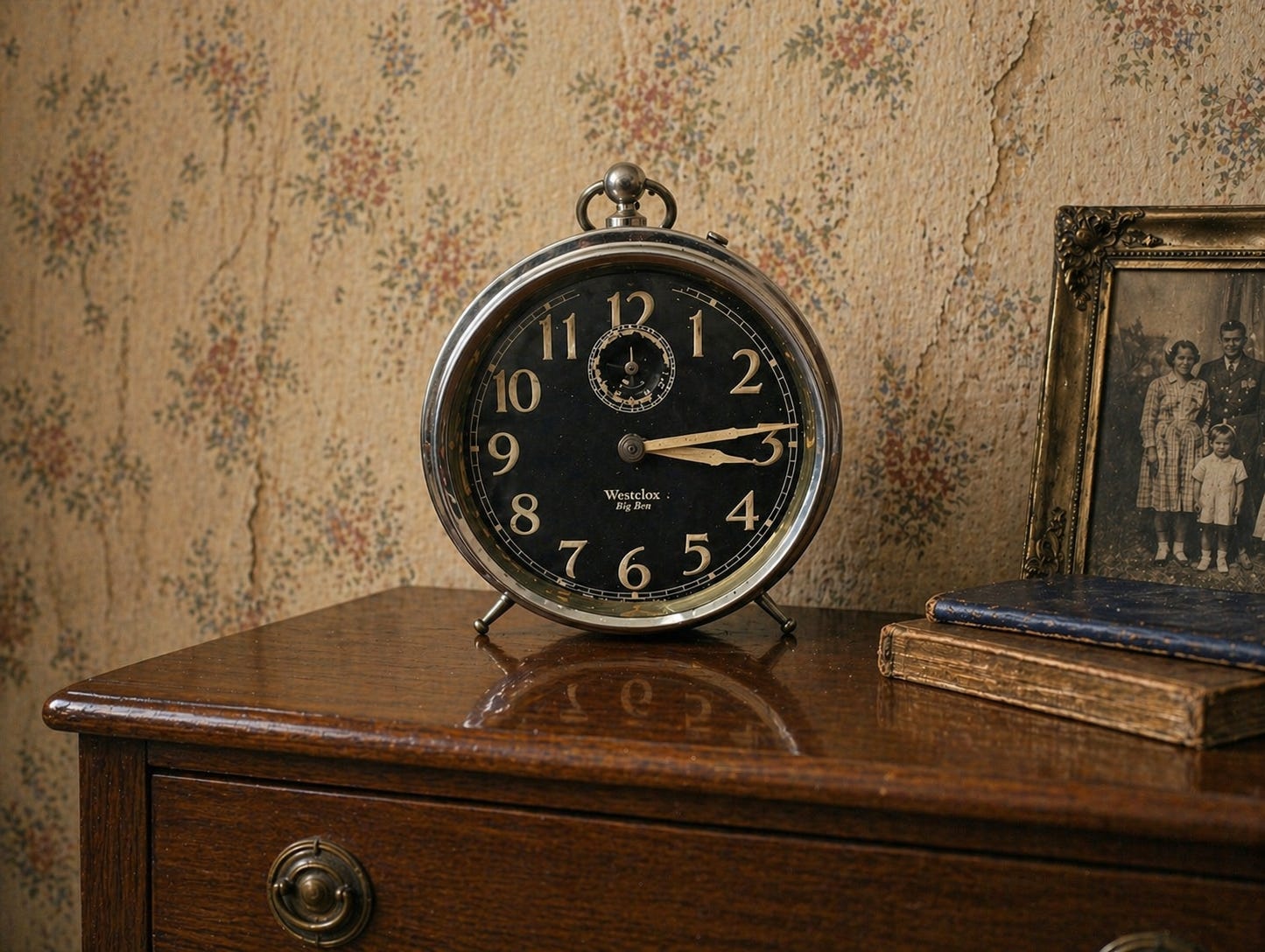
At 3:15 a.m., the alarm didn’t ring so much as declare itself.
A hard metallic clanging came from the dresser beside my grandfather’s bed—no hesitation, no negotiation. Time to get up. Time to put the papers out.
The clock was a Westclox Big Ben from the late 1920s. It sat where it always sat, on the left side of the double dresser in the small bedroom where Grandpa Wayne and Grandma Dorothy slept. It was just beyond his reach from the bed, but that hardly mattered. Grandpa was already moving.
I came to love that sound.
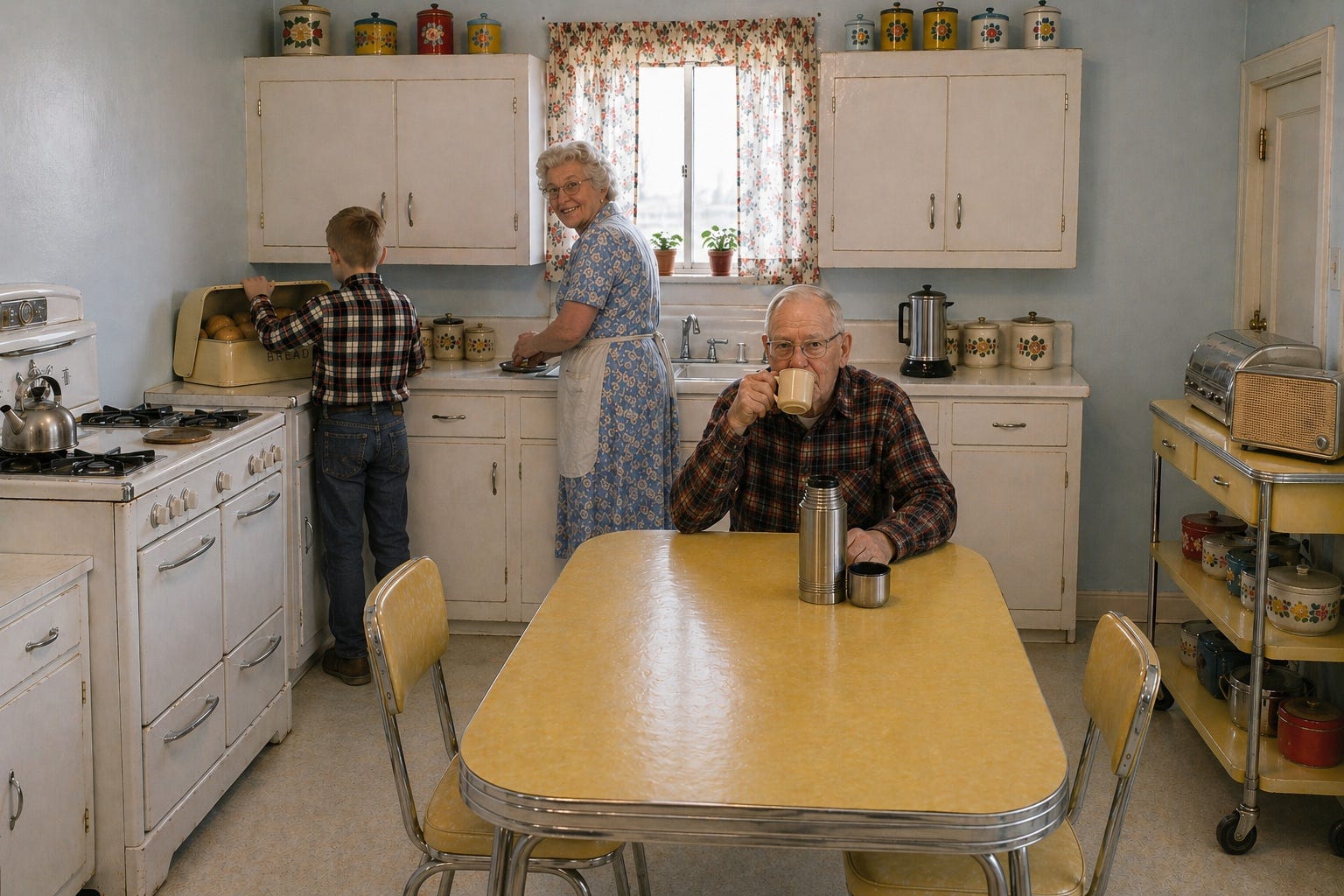
By the time I was five or six, I often stayed with my grandparents and slept in the other bedroom. At first he had to roust me. Later, I began to anticipate the alarm as part of my own rhythm. I would pad quietly through the living room and into the kitchen, where he and I would meet, both of us still pulling on clothes for the season.
The house was otherwise still. If rain had come in the night, it was usually spent by then, leaving only the soft patter from the eaves and a rawness in the air that called for a jacket. And a hat.
Grandpa started the percolator.
“Good morning,” he said.
Grandma had not yet come into the kitchen, but voices were never lowered in that house. We both knew she was probably listening.
“We’ll get breakfast at the café after we get the papers out,” he said. “But Grandma said if you want something for the road, there’s biscuits in the bread box she made yesterday.”
That meant fresh biscuits. And almost certainly icing.
I went straight to the bread box. Beside a half-used wax-paper bag of Wonder Bread, with its red, yellow, and blue balloon circles, sat the treasure wrapped in tin foil.
“Careful with that foil,” Grandpa said. “Your grandmother saves everything.”
From the doorway came her voice.
“Waste not, want not.”
She entered the kitchen with the authority of the woman of the house.
“Did we wake you up?” I asked.
“No,” she said. “I always hear your grandpa when he gets up. I don’t hear that alarm clock anymore. It’s been going off forever at this hour.”
Then she leaned toward me, as if passing along a secret.
“Besides, I was listening to my program. The Man Who Walks and Talks at Midnight.”
She straightened and watched me unwrap the biscuits.
“I made those especially for you,” she said, lowering her voice again, “and hid ’em so your grandfather wouldn’t eat ’em first.”
There were four iced biscuits.
“Damn, those look good,” Grandpa said.
“Stop cussin’,” Grandma said.
He gave the faintest shake of his head—the kind that in another man might have become an eye roll. But the matter was settled.
I looked from one to the other and understood that I had permission.
“Here, Grandpa,” I said, holding one out.
He took two steps toward me and accepted it gratefully.
It was not an occasional adventure. It was the day, and every day.
“Steve,” Grandma said, “where’s your hat? And did you bring your gloves?”
I had my hat. I had forgotten my gloves.
“Well,” she said, “I have a pair somebody gave your grandpa that were too small for his big hands. I kept ’em for you.”
She disappeared and came back almost at once. She knew exactly where everything was.
“Put these in your jacket pockets just in case. I don’t want you catching your death of a cold. It’s a raw mornin’.”
Grandpa wore his familiar felt fedora. Mine was a smaller trilby they had given me for Christmas, which I coveted because Grandpa said it made me look “sporty and sharp.”
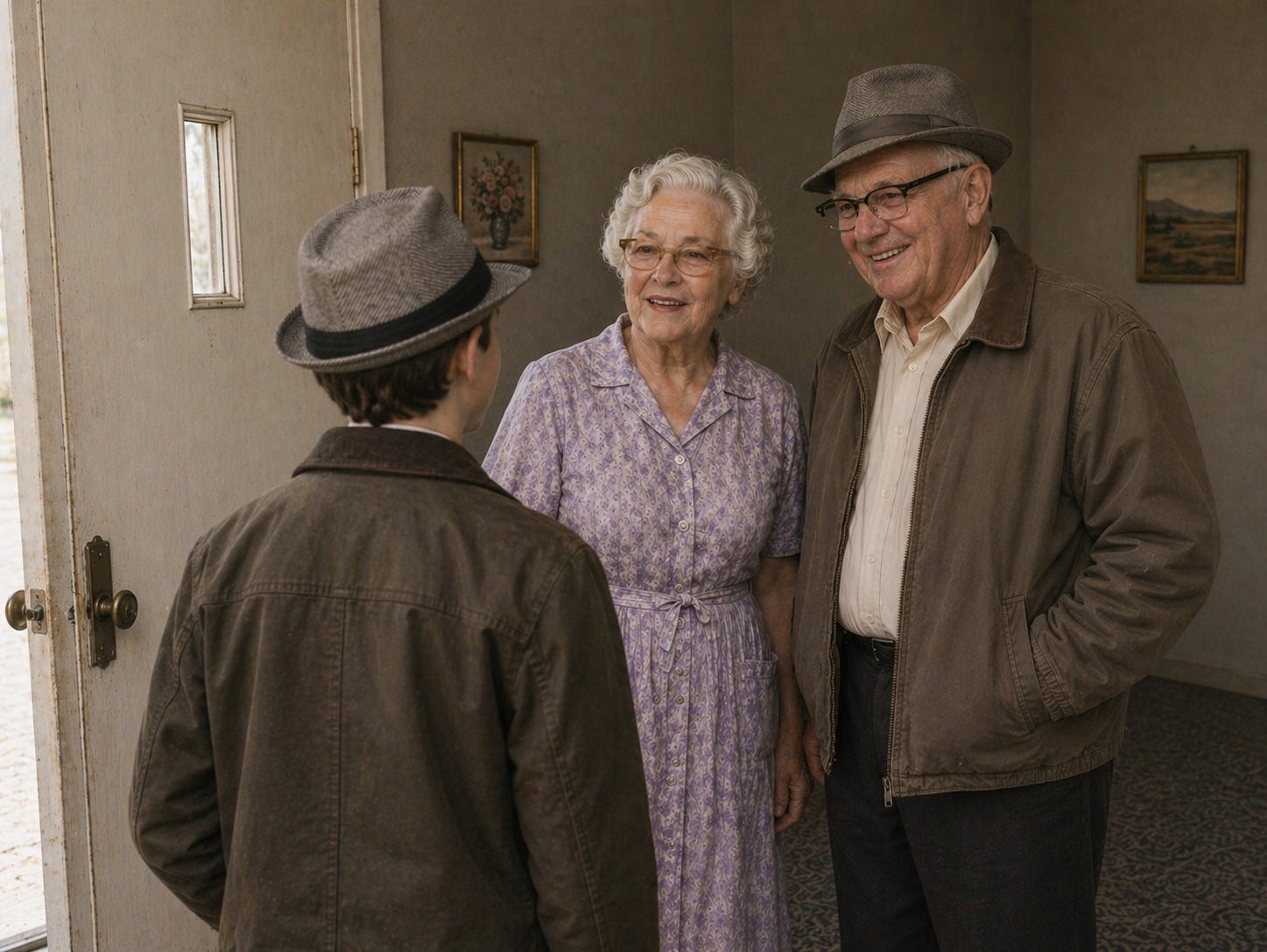
At the front door, Grandma turned on one small light. She and Grandpa smooched, as they called it.
“See you at lunchtime,” she said.
“Okay, hon.”
And just like that we were out the door.
We stepped onto the concrete stoop, then down the three steps to the walkway that slanted toward the driveway. There sat Grandpa’s beige 1958 Plymouth Belvedere coupe, the back seat covered with a blanket for his bird dog when he went hunting.
Grandpa took the hand brake off and let us roll quietly down the inclined driveway into the street. Only when we were pointed toward town did he start the engine and turn on the lights.
He did this out of respect for sleeping neighbors.
He did this out of respect for sleeping neighbors.
Then he turned on the AM radio. A George Jones tune came through, and he tapped his foot lightly on the gas pedal, making the car lurch just enough to make us laugh. A Patsy Cline song followed—Walkin’ After Midnight—one of Grandma’s favorites.
“Your grandma listens to that Walking Talking sonofabitch all night,” he said.
I nodded. “She says she likes to know the baseball scores. The Cardinals.”
“And she does,” he said. “Knows more than anybody I know.”
Then he started singing along, and I joined him. It was only four in the morning.
There was no wasted motion in those mornings. We rose, dressed, and moved into the hour as if it belonged to us. It was not an occasional adventure. It was the day, and every day.
It lives on in me. All my life I have often awakened at exactly 3:15 a.m., ready to put the papers out.
4:15 am The Route
That morning in 1959, Bartlesville was still asleep.
The newspaper truck was already waiting when we arrived at the small concrete building downtown that served as Grandpa’s office. Wired bundles of newspapers were stacked tight, ready to be unloaded.
I helped as I was able.
He dropped bundles for paperboys, one heavy bundle gripped by the wire in each hand—he was so strong. Some of the bundles were warped, the papers not stacked straight.
“Goddamn rookie," Grandpa growled. "Thinks he can just chuck my bundles onto the pavement without giving a shit except shit for brains.”
His way of cussing was almost an art form.
His way of cussing was almost an art form
The bundles loaded into the back of Grandpa’s panel truck with double doors on the back, we were underway on his route. I got out when he dropped bundles and partial bundles he arranged according the boy’s delivery route numbers at a corner or a house where a paperboy would collect his papers. An enterprising paperboy would already be there, wanting his papers to get going, but also liking to see Grandpa.
We stopped to load honor racks in hotel lobbies and storefronts, and handed papers directly to early risers and shopkeepers who knew him by name. The daily paper cost a dime. People handed him coins, and he seemed to know by feel whether the amount was right or change needed.
I rode shotgun, but got out and went with him when the racks were more than a few steps away—indoors or near a cashier.
Early customers could spot a Tulsa World and Tribune paperboy by the canvas change apron he wore, stenciled with the name across the front. “I’ll take one,” they’d say and the boy would take the money offered and make change if given a quarter or more, hand that and a paper to the customer saying, “thankyou,” as taught by Grandpa.
Inside, shopkeepers and cashiers who were friends smiled when they saw me.
“I see you brought your sidekick.”
Without exception, they shook my hand. Back then a firm handshake was expected, noticed, and deemed good. The Hodges men carried an expectation of strength.
Grandpa knew everyone—policemen, shopkeepers, paperboys, cashiers, security guards. He knew their families, their troubles, and the topics of the day, whether it was a municipal matter or a flood from the Caney River.
He was not only known. He was respected.
“Looks like you’ve grown a foot since you were here last,” a shopkeeper said to me, glancing toward my grandfather.
“Yes sir,” I would answer, as taught. “Mom had to get me new britches and shirts because I grew so much.”
That was Grandpa’s cue.
“He’s strong as an ox for ten,” he would say. He was, as he would call it, ‘fibbin’ a little’ since in fact I was nine, but I was very tall for my age. “Helps me with the papers.”
“How much you pay ’im?” he asked, grinning.
Without missing a beat, Grandpa answered, “We’re going to the café shortly. He’ll eat everything put in front of him.”
Everyone understood.
9:00 A.M. – The Café
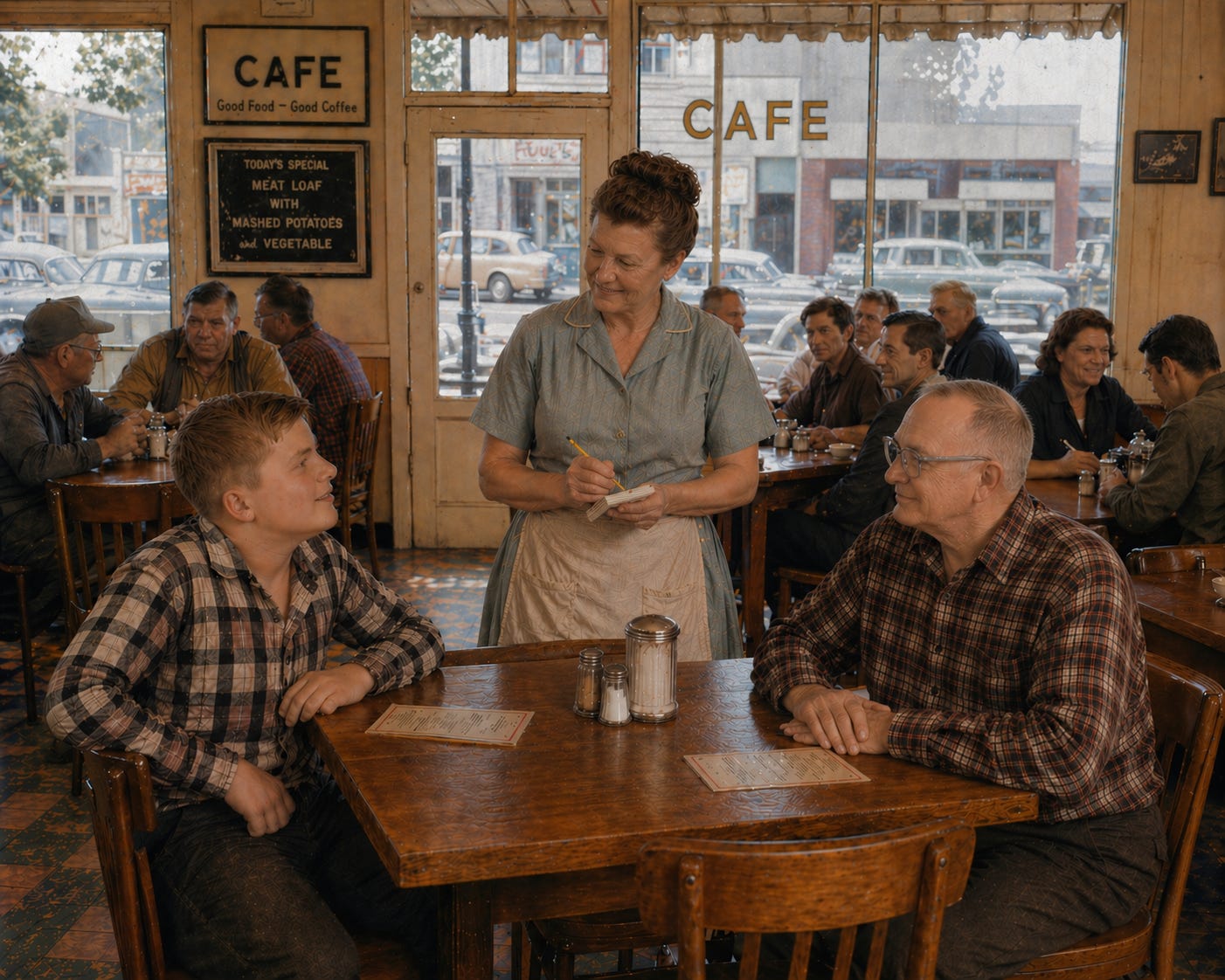
After the routes were out and the paperboys had begun their deliveries, we returned briefly to the office, then walked a couple of blocks to the Café. That was what the sign said, “Café.” I thought it perfectly named.
From the outside it was nothing much. Inside, it was alive.
Patsy, the matronly woman in charge whose possible alter ego Patsy Cline we’d heard singing on our ride into town, saw Grandpa.
“Mornin’, Wayne. Looks like you brought your deputy .,, Steve?”
“Yes ma’am,” I said, smiling back.
I never went there when she wasn’t there, running the place and handling tables of her own.
We sat down, glanced at the menu perfunctorily, and looked up at Patsy, already standing at our table.
“What’ll you have?” she asked.
Grandpa looked at me. “You first, Junior.”
“I’ll have a short stack, the round sausages, and some hash browns.”
Grandpa looked up at Patsy. “Better make that a full stack. He carried a bunch of bundles this morning, eats real good. I’ll have a couple eggs sunny side up, some toast, bacon, and coffee.”
Patsy turned back to me. “Steve, what do you want to drink?”
“Hot chocolate? Or if you don’t have it, a Roy Rogers.”
She smiled. “We’ve got it. Coming right up.”
We ate quickly. Devoured is the better word.
Grandpa paid at the counter, came back, and left a generous tip for Patsy. Then we left.
10:00 A.M. – The Office
Paperboys each showed up to report on their routes. Grandpa asked each boy about their deliveries, about any prior problem spots, about how school was going, about their families.
Then the boys went to school, started off right..
The phone rang. Complaints,
“I’m sorry,” he would say. “What’s your address?”
He wrote it down. He told each he would speak to their paperboy. If they didn’t get their paper he’d deliver it himself. No fuss.
But he would straighten it out and make it right.
Friends drifted in. Coffee appeared. Cards came out.
Gin rummy.
His memory was exact—cards, coins, accounts.
I was counting coins too, to put in the paper rolls by denomination that he’d deposit at the bank later. “Junior,” he might say, “I believe you shorted that roll.” How did he see that while he was counting and rolling so fast?
He was always right.
Unsold papers he’d clip the top center front page date using a one sided razor blade, count and stack to turn in to the home office. Nothing casual. Everything in its place. Nothing left unaccounted for.
It was work.
But it did not feel heavy.
It felt ordered.
The Clock
The Big Ben clock sat on his dresser, marking the minutes, hours, days and years of an ordered life well lived with discipline and pride.
When he died, the clock passed to my father, who kept it close, wound it very day and kept it ticking, even in his last days. When my father died, it came to me.
It sits on my desk now.
It keeps perfect time.
Sometimes I wind it, turn on the alarm and let it clang when the designated time arrives. The bell rings slower, paced more akin to a firehouse alarm bell than a modern alarm clock.
The sound is the same as it has ever been—it clangs, insistent, impossible to ignore.
For a moment, it is 3:15 a.m. again, my grandfather is already on his feet, already moving into the day waiting for him. Myself, my father and younger brother cherish memories of tagging along with Grandpa, the guardian of the hours. Grandpa didn’t cotton to church as his parents had, but the rituals he employed seemed as sacred, called to shepherd generations of young men about hard work, honesty and as he adjured each, to “keep your nose clean.”.
Four generations have heard that clock sound.
It does what it has always done.
It tells you when it is time to get up and do your work.
⸻
He spoke of life, its currents and its drift,
And lived a model worthy of esteem.
His wisdom, freely given as a gift,
Still shapes the lives that follow in its stream.
I am not least among the ones he taught;
We learn from him as though he still stands near.
In memory, his quiet lessons wrought—
We hear his voice, and almost think him here.
We hear him laugh and cuss as if alive—
He is not gone, but waits holding a scroll;
Beyond this place of wrath he does abide
In God’s heaven, the captain of his soul.
When we pass through this broken world of years,
We’ll meet again—good works, a clock; no tears.
⸻
Author’s Note
This piece is part of my ongoing effort to preserve the lives of ordinary people who were anything but ordinary to those who knew them. My grandfather was not a man of speeches. He was a man of rhythm, duty, humor, exactness, and work. The old Westclox Big Ben sits on my desk, still keeping time.
Wonerfully captured. Cussin’ before dawn.
Gotta love this memory.
I had a little Ben. I put it on my dresser just far enough that I had to get up to turn it off. Even at 12 I was aware of benefits of diligence and good habits. Arising early meant no hurry to be on time. This was a lovely “mental video” testimony of your grandparents’ work ethic and love of you and the community and the working people in their town. ❤️